Static geological modelling
Grids built for simulation from the ground up: structural framework and fault model, zonation, facies, petrophysical properties and defensible upscaling.
- Framework
- Facies
- Petrophysics
- Upscaling

Independent subsurface consultancy
PetroPeers builds, rebuilds and independently assures the static geological models behind appraisal, development and storage decisions — and tells you plainly where the uncertainty actually sits.
What we do
A geological model is an interpretation of the reservoir and associated property distribution. We build models that are internally consistent, honest about their assumptions, and ready for the reservoir engineer, the auditor and the partner who disagrees with you.
Grids built for simulation from the ground up: structural framework and fault model, zonation, facies, petrophysical properties and defensible upscaling.
Independent QA/QC of models built in-house, by a previous consultant or by the operator. Structured, decision-based assurance with a documented QC trail — not a list of opinions.
Workflow-driven sensitivity and uncertainty analysis. Screen the parameters that actually move volumes, then deliver low, mid and high realisations that can be carried through to simulation and economics.
A consistent chance-of-success framework applied across a portfolio, so that prospects, leads and near-field opportunities can be compared on the same terms and ranked for a drilling campaign.
Coordination of the G&G component of FDPs and development projects: scope, deliverables and resourcing, development and infill well locations, sidetrack decision trees, and the G&G work programme that gets a discovery to sanction.
2D and 3D interpretation, depth conversion, fault seal analysis, and image-log-calibrated fracture networks built from ant-tracked volumes for fractured reservoirs.
Volumetric distributions, classification, annual resource reporting and audit support.
Fast, structured technical evaluation for farm-ins, acquisitions and divestments.
Well proposals, evaluation programmes, wellsite supervision and pre/post-drill review.
Peer assists, structured coaching and modelling training for in-house teams.
Capability
Four things we are asked for most often, and what each one actually involves.
01 — Static modelling
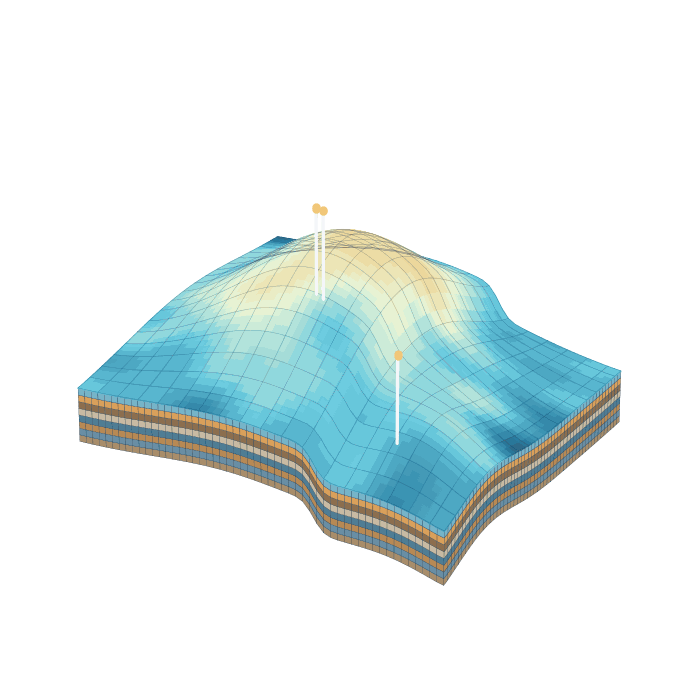
A static model earns its keep when the reservoir engineer can run it and the result still honours the geology. We build the structural framework, zonation, facies and property distributions with the dynamic end-use in mind from day one — including the upscaling decisions and the history-match iterations that follow.
02 — Assurance
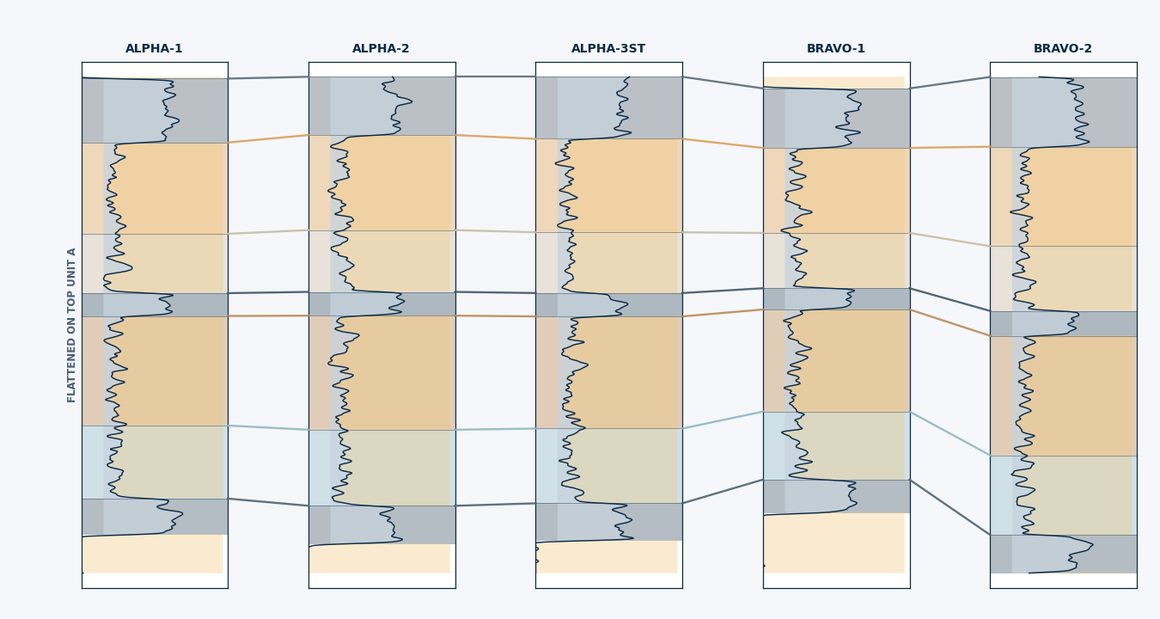
Non-operated partners, boards and lenders often need to know whether a model can be relied on before money moves. We review the work that has been done, document what we checked and why, and give a clear position — including the case where the answer is "this is sound".
03 — Uncertainty & resources
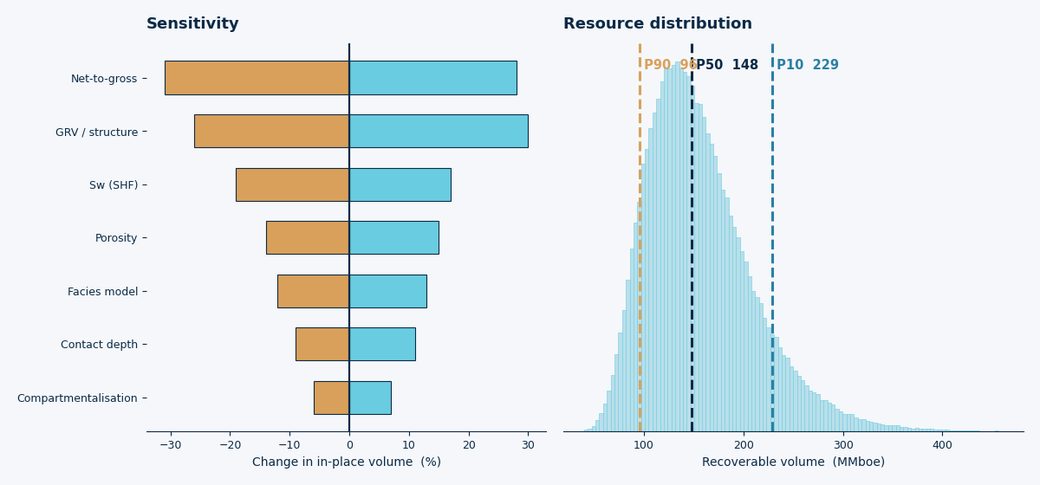
A single deterministic case is a hypothesis, not a resource estimate. We build the uncertainty workflow around the parameters that genuinely move in-place and recoverable volumes, then carry a coherent low–mid–high set through to simulation, reporting and economics.
04 — Complex reservoirs
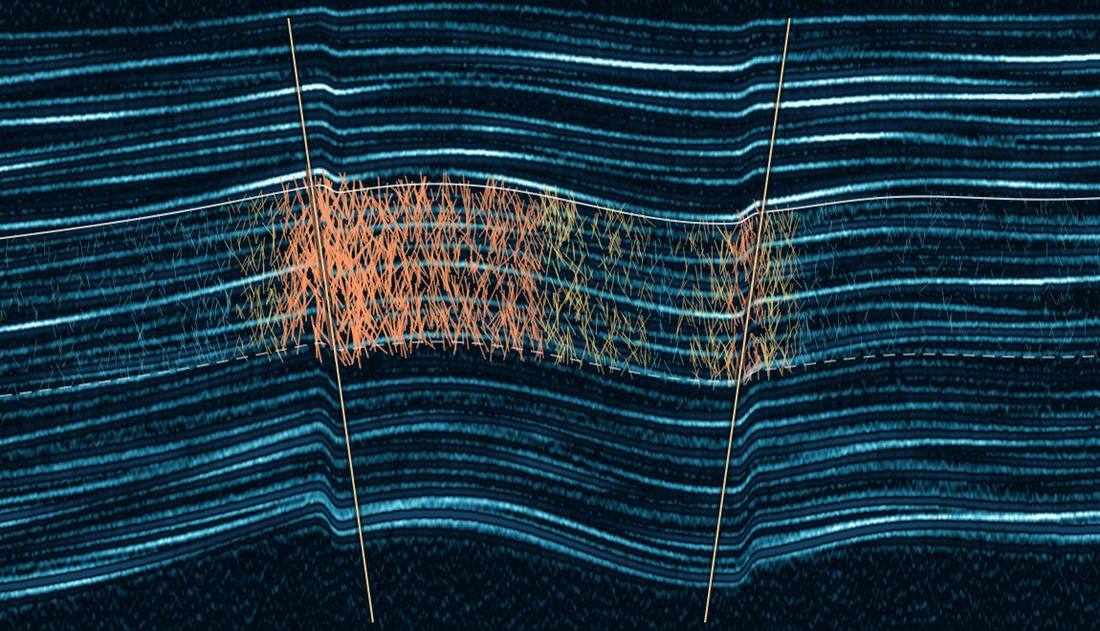
Where flow is controlled by fractures or by a compartmentalised fault framework, the conventional property model is only half the story. We build fracture networks from ant-tracked seismic volumes calibrated to borehole image interpretation, then tune fracture intensity until the model reproduces the permeability seen at the wells.
Where the work lands
Producing fields, exploration portfolios, gas storage, and CO2 sequestration all ask a version of the same question: how confident are we in the reservoir property distribution, and what would change the answer.
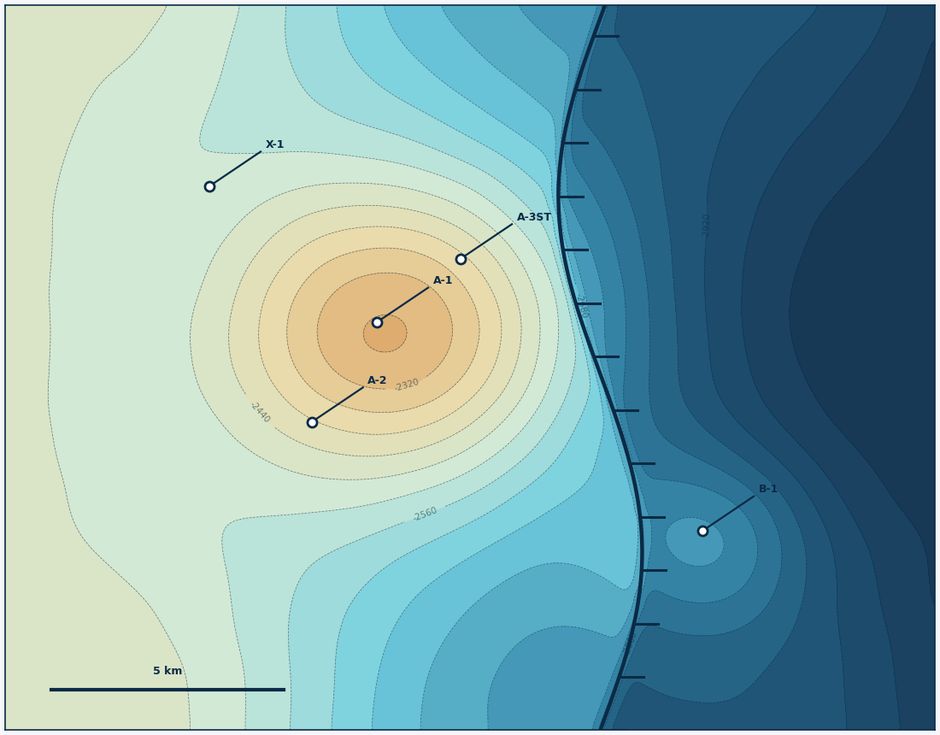
Near-field appraisal, infill and development well locations, history-match support, reservoir characterisation, and the subsurface coordination that keeps an operator and a joint venture pointed at the same picture.
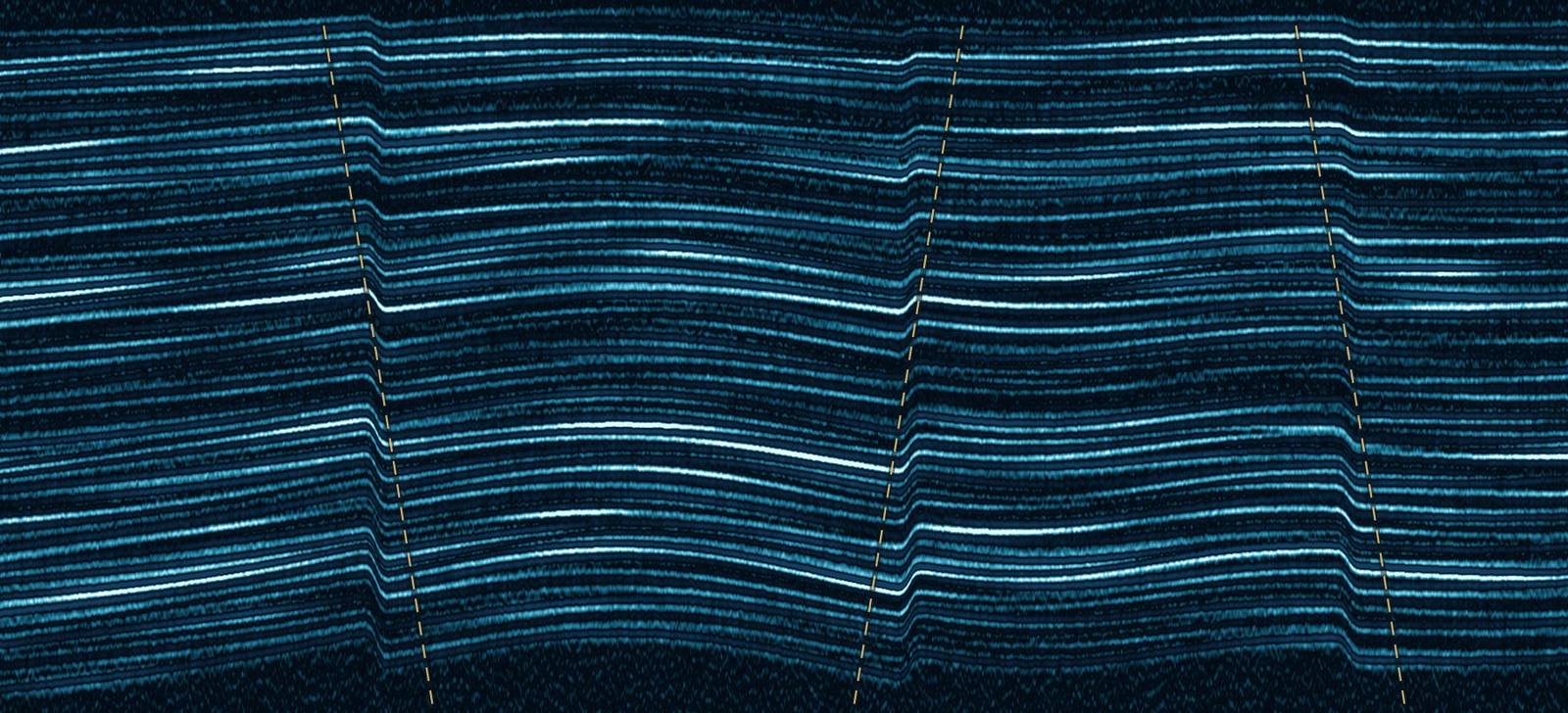
Prospect generation and evaluation, risking and ranking, volumetrics, appraisal well proposals, and pre- and post-drill resource and risk review for a drilling campaign.
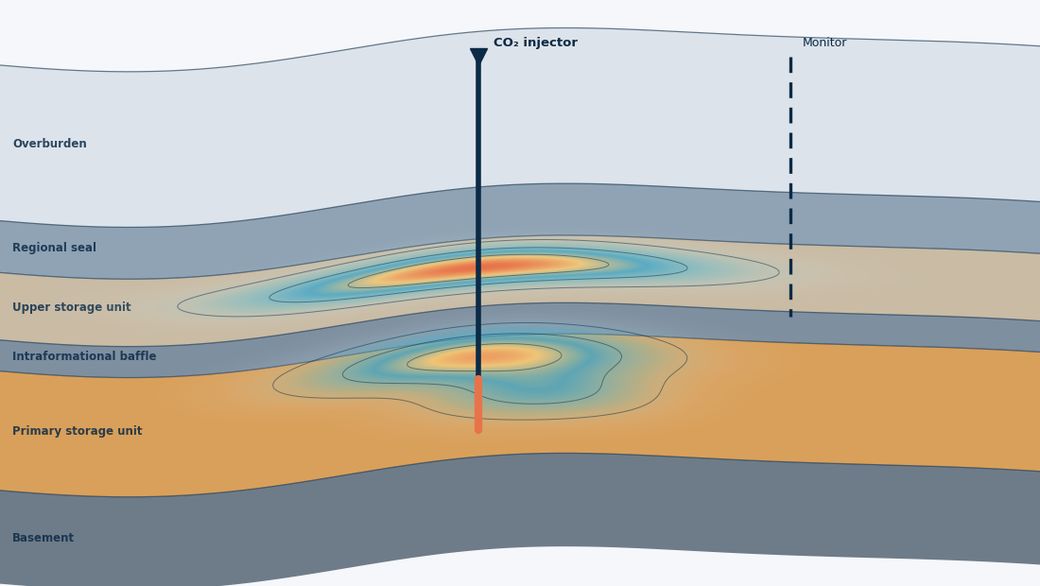
Storage-site characterisation, capacity and containment, stochastic models built for plume simulation, and the uncertainty analysis needed to establish whether a site is suitable in the first place.
Data room evaluation, farm-in screening and technical due diligence under deal timelines.
Technical opinion for legal counsel, boards and investors on reservoir and modelling matters.
Reviewing and influencing operator work, and preparing the JV's own independent position.
Multi-disciplinary subsurface studies delivered to milestone, scope and budget.
How we work
Most subsurface projects fail on scope and handover rather than on technique. We agree the deliverables and the decision they feed before any grid is built.
Define the decision the model has to support, then audit what the data can actually carry. Deliverables, timeline and the assumptions we are prepared to defend are written down at the start.
Framework, zonation, facies and properties, built in tNavigator, Petrel, RMS or your own environment so the model stays maintainable by your team after handover.
Sensitivity screening, stochastic realisations and volumetric distributions — and a plain statement of where the result is fragile.
Documented workflows, QC plots and a walkthrough with the people who inherit it, plus continued support through simulation, history matching and partner review.
Where we work
About PetroPeers
PetroPeers is a specialist subsurface consultancy working with operators, non-operated joint ventures, storage developers, investors and legal counsel. The name is the brief: senior geoscience delivered as a peer to your team — close enough to be useful, independent enough to disagree.
The person who scopes the work is the person who builds the model and presents the result. No handing the build down a level once the contract is signed.
Three decades inside operators and joint ventures across exploration, development, production and storage — so recommendations account for what a project can actually absorb.
Workflows, assumptions and QC are documented as the work proceeds, so the model can be audited, updated and defended long after handover.
Independence is only worth paying for if it comes with candour — including when the finding is inconvenient, or when the existing model turns out to be fine.
Software
Work is delivered in the client's own environment wherever possible, so the model stays maintainable in-house.
A model review that changes nothing is still worth having. One that changes the drilling programme is worth a great deal more.
Independent review work has moved opportunities from the relinquishment conversation to the top of a campaign — and, just as often, confirmed that an existing model was sound and the team could proceed. Both outcomes are the deliverable.
Get in touch
Whether it's a full model build, a second opinion before a partner meeting, or a data room closing on Friday — a short conversation is usually enough to work out whether we can help and what it would take.
We'll come back to you within one business day. If it's urgent, call +61 1300 79 39 42.